Manaslu Circuit Trek with Tsum Valley, Ultimate Guide
- soleencounters
Introduction
If you want a Himalayan trek that still feels untouched, the Manaslu Circuit Trek delivers something rare. This is not just another popular route. It is a journey into a quieter, deeper side of Nepal where culture, nature, and adventure still exist in balance.
Table of Contents
Compared to Everest Base Camp and Annapurna Circuit, Manaslu sees far fewer trekkers. You are not walking in a crowd. You are walking through remote valleys, crossing rivers on long suspension bridges, and entering villages where traditions have remained unchanged for generations.
When you add the Tsum Valley extension, the experience becomes even more powerful. You step into a sacred Himalayan valley shaped by Tibetan Buddhism, ancient monasteries, and a slower way of life.
This is where trekking becomes more than a trip. It becomes a story you carry for life.
Quick Facts
| Detail | Information |
|---|---|
| Duration | 14 to 16 days (Circuit), 18 to 22 days (with Tsum Valley) |
| Distance | Approx. 177 km |
| Max Altitude | 5,106 m (Larkya La Pass) |
| Difficulty | Moderate to Challenging |
| Best Seasons | Spring and Autumn |
| Start Point | Machha Khola |
| End Point | Dharapani |
Why Choose Manaslu Circuit Trek
The Manaslu Circuit is one of the last great trekking routes in Nepal that still feels raw and authentic.
First, there are fewer crowds. On Everest and Annapurna routes, you often walk behind long lines of trekkers. In Manaslu, you may walk for hours with only the sound of the river and wind. This changes the entire experience. It becomes quieter, more personal, and more immersive.
Second, the cultural experience is deeper. As you move closer to the Tibetan border, villages reflect strong Tibetan Buddhist traditions. You will see prayer wheels spinning in the wind, mani walls carved with sacred texts, and monasteries that are still active centers of spiritual life. Locals greet you warmly, and interactions feel genuine rather than commercial.
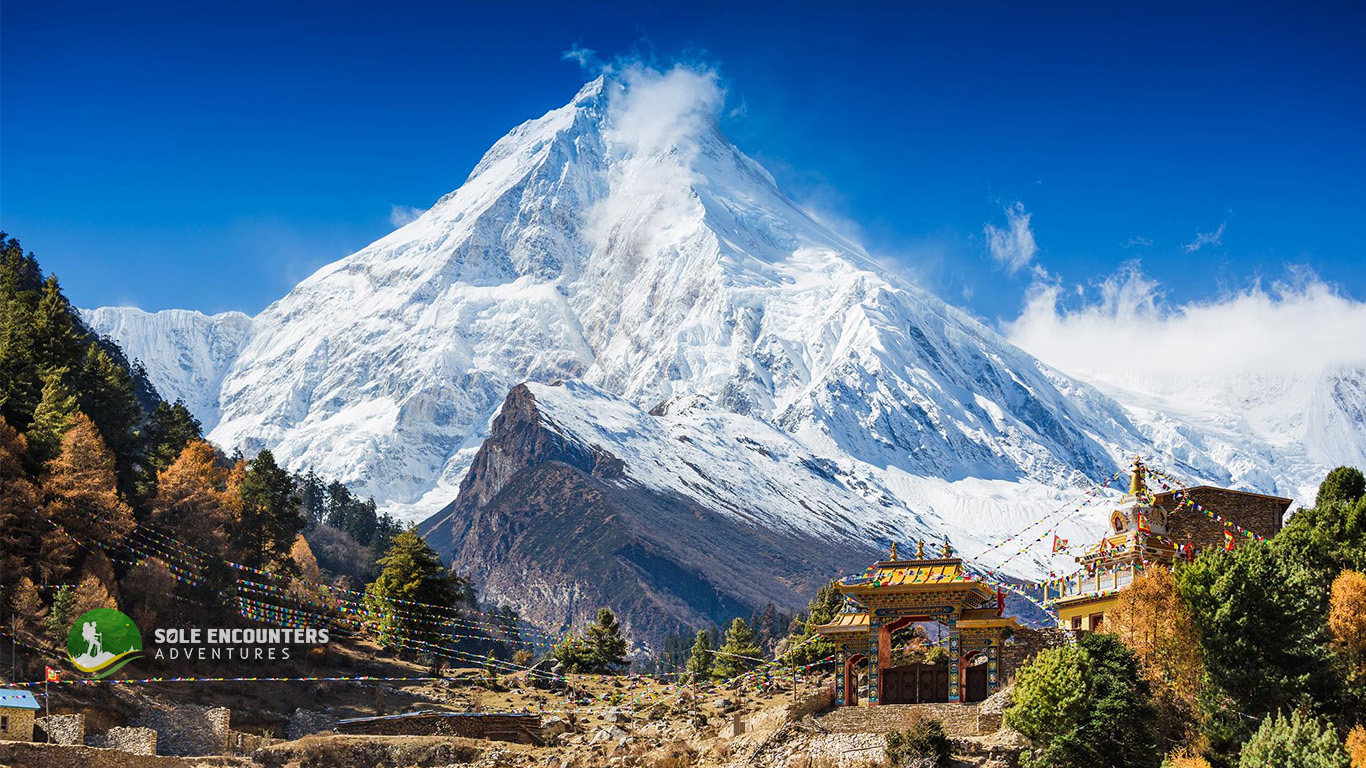
Third, the landscape evolves dramatically. You start in lush green valleys filled with rice fields and waterfalls. Gradually, the terrain becomes rugged and alpine. Snow peaks begin to dominate the horizon, especially as you approach Samagaun and the high pass.
Finally, there is the sense of achievement. Crossing Larkya La Pass at 5,106 meters is not easy. The long ascent, thin air, and early morning start test your endurance. But when you reach the top and see the Himalayan giants around you, the reward feels real.
This is a trek for people who want more than just photos. It is for those who want a meaningful journey.
Route Overview
The trek begins with a scenic drive from Kathmandu to Machha Khola. This small riverside village marks the start of your walk.
The early days follow the Budhi Gandaki River. You move through narrow gorges, dense forests, and terraced hillsides. Suspension bridges are a constant feature. Some are short and simple, while others stretch high above the river, offering both excitement and incredible views.
As you climb higher, the environment begins to shift. Villages like Jagat and Deng introduce you to traditional mountain life. Stone houses, prayer flags, and small monasteries become more common.
Further up, the trail opens into wider valleys. Namrung and Samagaun offer stunning views of Manaslu and surrounding peaks. These are also important acclimatization stops where your body adjusts to the altitude.
The final challenge is the crossing of Larkya La Pass. This is the highest point of the trek and often starts before sunrise. The climb is steady but demanding. Reaching the top gives you panoramic views of snow covered mountains in every direction.
After the pass, you descend into Bimthang and continue to Dharapani, where the trek ends and connects with the Annapurna region.
Tsum Valley Extension
What It Is
Tsum Valley is a hidden side valley branching off from the main Manaslu route. It requires an additional 5 to 7 days, but it transforms the trek into something far more meaningful.
Why It’s Special
For centuries, Tsum Valley remained isolated from the outside world. Because of this, its culture has been preserved in a way that is rare in today’s Himalayas.
The valley is deeply connected to Tibetan Buddhism. Monasteries like Mu Gompa and Rachen Gompa are not just historical sites. They are living spiritual centers where monks and nuns continue daily practices.
You will also notice unique traditions. The people of Tsum Valley follow strong values of compassion and non violence. Hunting is forbidden, and the valley is considered sacred.
The landscape itself feels different. It is more open, more peaceful, and less traveled. You see fewer trekkers, fewer signs of modernization, and more connection to nature.
Emotional and Cultural Depth
Adding Tsum Valley slows the journey down. You spend more time in fewer places. You interact more with locals. You absorb the rhythm of life rather than rushing through it.
Instead of just completing a circuit, you experience a deeper layer of the Himalayas.
For many trekkers, this becomes the most memorable part of the entire trip.
Detailed Itinerary (Sample 19 Days)
Day 1: Arrival in Kathmandu (1,400 m)
Meet your guide, prepare permits, and check gear.
Day 2: Drive to Machha Khola (930 m)
A long but scenic drive through hills, rivers, and rural villages.
Day 3: Trek to Jagat (1,340 m), 6 to 7 hours
Follow the river, cross multiple suspension bridges, and enter the restricted area checkpoint.
Day 4: Trek to Lokpa (2,240 m), 6 hours
Gradual climb with views of surrounding hills. Entry toward Tsum Valley route.
Day 5: Trek to Chumling (2,386 m), 5 hours
Walk through pine forests and small settlements. Experience first Tibetan influenced villages.
Day 6: Trek to Chhokang Paro (3,010 m), 5 to 6 hours
Open valley views, longer walking day, increasing altitude.
Day 7: Trek to Nile (3,361 m), 5 hours
Dry terrain, fewer trees, more dramatic mountain scenery.
Day 8: Explore Mu Gompa (3,700 m)
Visit monastery, interact with monks, short hikes for acclimatization.
Day 9: Return to Chumling
Descending helps recovery before rejoining main trail.
Day 10: Trek to Deng (1,860 m)
Rejoin Manaslu Circuit trail and continue along the river.
Day 11: Trek to Namrung (2,630 m), 6 hours
Enter stronger Tibetan cultural region. Beautiful village setting.
Day 12: Trek to Samagaun (3,530 m), 5 hours
Wide valley, views of Manaslu, important acclimatization base.
Day 13: Acclimatization Day
Optional hike to Manaslu Base Camp or Pungyen Gompa.
Day 14: Trek to Samdo (3,860 m), 4 hours
Short but important altitude gain. Strong wind conditions possible.
Day 15: Trek to Dharmasala (4,460 m), 4 hours
Prepare for pass crossing. Early rest recommended.
Day 16: Cross Larkya La Pass (5,106 m), 8 to 9 hours
Longest and toughest day. Early start, cold conditions, incredible views.
Day 17: Trek to Dharapani (1,960 m)
Long descent through forests and villages.
Day 18: Drive back to Kathmandu
Rest and celebrate completion.
Day 19: Departure
Difficulty and Fitness
The Manaslu Circuit Trek is classified as moderate to challenging.
The difficulty comes from several factors:
- Long daily walking hours
- Steady altitude gain
- Remote conditions with limited facilities
- High altitude crossing above 5,000 meters
You should be comfortable walking 5 to 7 hours per day on uneven terrain. Previous trekking experience helps but is not mandatory if you prepare well.
Altitude is the biggest risk. As you go above 3,000 meters, your body needs time to adapt. Headaches, fatigue, and shortness of breath are common if you ascend too quickly.
This trek is ideal for:
- Fit beginners with good preparation
- Intermediate trekkers looking for a challenge
- Experienced trekkers seeking a quieter alternative
It is not suitable for those looking for luxury or very short trekking days.
Best Time to Trek
Timing matters a lot for this trek.
Spring (March to May)
Spring offers warmer temperatures and blooming forests. Rhododendron flowers add color to the lower trails. Visibility is generally good, especially in the mornings.
Autumn (September to November)
This is the best overall season. The weather is stable, skies are clear, and mountain views are sharp. Trails are dry and conditions are reliable.
Winter (December to February)
Possible but challenging. Snow can block Larkya La Pass, and temperatures drop significantly.
Monsoon (June to August)
Heavy rain, landslides, and poor visibility make this season less suitable.
Accommodation and Food
Accommodation is mainly in tea houses.
These are simple lodges run by local families. Rooms are basic but clean. As you gain altitude, facilities become more limited.
At lower elevations, you may find:
- Private rooms
- Attached bathrooms in some places
- Wider food choices
At higher elevations:
- Shared bathrooms
- Limited heating
- Simpler meals
Food is filling and designed for energy.
Typical meals include:
- Dal Bhat, the staple meal with rice, lentils, and vegetables
- Noodles and soups
- Fried rice and pasta
- Tea, coffee, and basic snacks
The higher you go, the more expensive food becomes due to transport challenges.
Permits and Regulations
Manaslu is a restricted trekking area.
You will need:
- Manaslu Restricted Area Permit
- Manaslu Conservation Area Permit
- Annapurna Conservation Area Permit
Important rules:
- You must trek with a licensed guide
- Minimum two trekkers required
- Independent trekking is not allowed
These regulations help protect the environment and maintain safety in remote areas.
Packing List
Packing smart is essential for comfort and safety.
Clothing
- Base layers and thermal wear
- Insulated down jacket
- Waterproof jacket and pants
- Trekking pants and shirts
Footwear
- Strong trekking boots
- Comfortable camp shoes
Gear
- Backpack and rain cover
- Sleeping bag for cold temperatures
- Trekking poles
- Headlamp
Essentials
- Water bottles and purification tablets
- First aid kit
- Sunscreen and sunglasses
- Snacks and energy bars
Keep your bag light but complete. Balance is key.
Expert Tips
Acclimatization
Follow the climb high, sleep low principle. Do not rush.
Hydration
Drink regularly, even if you do not feel thirsty.
Pacing
Slow and steady is better than fast and exhausted.
Mental Strength
There will be tough days. Stay consistent and focused.
Choose the Right Team
A good guide makes a huge difference in safety and overall experience.
Why Book With Us
Choosing the right trekking company can define your entire experience.
At Sole Encounters Adventures, we focus on real Himalayan journeys, not just standard packages.
What you get:
- Experienced local guides who understand terrain, culture, and safety
- Strong focus on altitude awareness and risk management
- Personalized itineraries that match your pace and goals
- Genuine connection with local communities
Explore your options:
👉 https://www.soleencounterstrek.com/trip/manaslu-circuit-trek
👉 https://www.soleencounterstrek.com/trip/tsum-valley-trek
We do not just guide treks. We create experiences that stay with you long after the journey ends.
Contact us today and start planning your Manaslu adventure.
FAQ
Is Manaslu Circuit Trek difficult?
It is moderately to highly challenging due to altitude and long trekking days.
How long does it take?
14 to 16 days for the circuit, 18 to 22 days with Tsum Valley.
Is Tsum Valley worth it?
Yes. It adds cultural depth and a unique, less visited experience.
Do I need a guide?
Yes, it is mandatory for this restricted area.
What is the highest point?
Larkya La Pass at 5,106 meters.
Is altitude sickness common?
It can happen. Proper acclimatization reduces the risk.
Can beginners do this trek?
Yes, if they are fit and prepared properly.
Conclusion
The Manaslu Circuit Trek with Tsum Valley is one of the most complete trekking experiences in Nepal.
It offers solitude, culture, challenge, and beauty in a way few routes can match. You are not just visiting the Himalayas. You are experiencing them at a deeper level.
From remote villages to high mountain passes, every day brings something new. Every step feels earned.
If you are ready for a trek that goes beyond the ordinary, this is your path.
👉 Book your Manaslu Circuit Trek today
👉 Speak with our experts and plan your journey
Your Himalayan adventure starts here.
Recent Posts
.jpg)
3rd Jul, 2025
.jpg)
4th Jul, 2025
.jpg)
4th Jul, 2025
.jpg)
7th Jul, 2025
.jpg)
8th Jul, 2025
.jpg)
8th Jul, 2025
.jpg)
8th Jul, 2025

10th Jul, 2025